
Table of Contents
Many adults notice that their vision needs to change as they get older. Reading glasses, progressive lenses, and frequent prescription updates may become part of daily life. However, some seniors begin wondering whether continuing with glasses is the best long-term option or whether procedures such as cataract surgery or lens-based options may better support their lifestyle.
As vision changes with age, many seniors begin exploring alternatives to traditional glasses. Understanding available treatment options, including cataract-related procedures and lens-based options, can help patients make informed decisions during a consultation with an eye care professional.
The right approach depends on several factors, including eye health, lifestyle goals, prescription stability, cataract development, and overall vision needs. A comprehensive evaluation with an ophthalmologist can help determine whether cataract surgery, lens-based procedures, or continued use of glasses is the most suitable option.
Why Vision Changes More With Age
Aging naturally affects the eyes. Many people experience gradual changes in focusing ability, contrast sensitivity, and visual clarity over time.
One of the most common age-related vision changes is presbyopia, a condition where the eye’s natural lens becomes less flexible, making it harder to focus on nearby objects. This is why many adults begin needing reading glasses in their 40s and beyond.
The National Eye Institute notes that age-related eye conditions become more common as people get older, making regular eye examinations an important part of maintaining long-term vision health.
For seniors, vision changes may also occur due to:
- Cataracts
- Glaucoma
- Dry eye disease
- Age-related macular degeneration
- Changes in prescription needs
Regular senior eye exams can help identify whether vision changes are simply related to aging or connected to an eye condition requiring treatment.

Common Vision Problems in Seniors
As people age, changes in the eyes can affect clarity, focus, and overall vision quality. Common senior vision problems include presbyopia, cataracts, glaucoma, dry eye disease, and age-related macular degeneration. Regular eye exams can help detect these conditions early and identify appropriate vision correction options.
Presbyopia and Difficulty Reading
Presbyopia affects nearly everyone as they age. Common signs include:
- Holding reading materials farther away
- Needing brighter lighting
- Eye strain while reading
- Difficulty focusing on close objects
Many seniors manage presbyopia with:
- Reading glasses
- Progressive lenses
- Bifocal lenses
- Contact lenses designed for multifocal vision
However, some patients begin exploring additional vision correction options or lens-based procedures when glasses become inconvenient.
Cataracts and Cloudy Vision
Cataracts occur when the eye’s natural lens becomes cloudy over time. Symptoms may include:
- Blurry vision
- Glare around lights
- Difficulty driving at night
- Reduced color brightness
- Frequent prescription changes
According to the National Eye Institute, cataracts are one of the most common age-related eye conditions in older adults.
When Glasses Are No Longer the Most Effective Solution
Glasses remain a safe and effective way to correct vision for many seniors. However, some adults may begin exploring other options when glasses no longer provide the level of visual comfort, convenience, or independence they want.
Common signs that glasses may not be meeting your needs include:
- Needing frequent prescription changes
- Difficulty reading, driving, or enjoying hobbies even with updated lenses
- Managing multiple pairs of glasses for different activities
- Wanting to reduce dependence on corrective eyewear
For some seniors, a comprehensive senior eye exam can help determine whether options such as cataract surgery or lens-based procedures may be appropriate.
It is important to remember that glasses are not always replaced by surgery. The best vision correction approach depends on factors such as eye health, lifestyle needs, prescription stability, and whether age-related conditions like cataracts are present.
Understanding Lens Technology and IOL Options
During cataract surgery, the eye’s cloudy natural lens is removed and replaced with an artificial intraocular lens (IOL). The type of lens selected depends on several factors, including eye health, lifestyle needs, and visual goals.
Monofocal Lenses
Monofocal lenses are designed to provide clear vision at one primary distance, such as distance vision. Some patients may still need glasses for certain activities after surgery.
Toric Lenses
Toric lenses may be considered for patients with astigmatism. These lenses are designed to help address corneal irregularities that affect vision clarity.
Multifocal and Advanced Technology Lenses
Some advanced lens options are designed to provide a broader range of vision, potentially helping patients with different visual tasks. Candidacy depends on factors such as eye health, lifestyle preferences, and individual expectations.
Choosing the Right Lens Option
Selecting an IOL is a personalized decision made with an ophthalmologist. A cataract evaluation appointment allows patients to discuss available lens technologies and understand which options may align with their vision needs.
Signs Seniors Should Consider Surgical Vision Correction Options
A senior may benefit from discussing surgical options if they experience:
1. Increasing Dependence on Glasses
If glasses are becoming difficult to manage or multiple prescriptions are needed throughout the day, a consultation may provide additional options.
2. Difficulty With Daily Activities
Vision problems affecting:
- Driving
- Reading
- Cooking
- Exercising
- Hobbies
may indicate the need for a more detailed evaluation.
3. Changes in Vision Quality
Blurred vision, glare, halos, or reduced contrast may require assessment for cataracts or other eye conditions.
4. Interest in Reducing Dependence on Glasses
Some seniors explore vision correction options after 50 simply because they want more flexibility in their daily routines.
Comparing Glasses and Cataract Surgery Outcomes
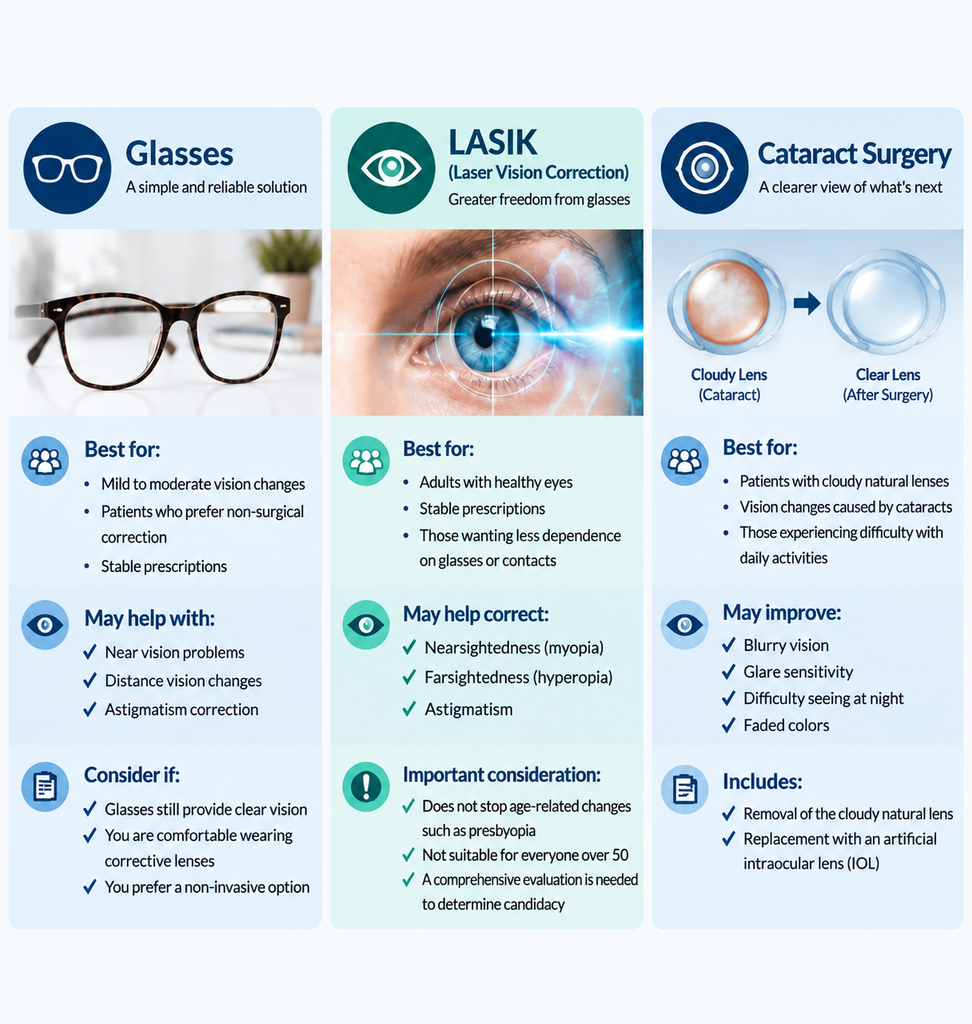
Choosing between glasses and surgical vision correction options depends on individual vision needs, eye health, and personal expectations.
| Option | Advantages | Considerations |
| Glasses | Non-invasive and easy to update | Continued dependence on eyewear |
| Cataract Surgery | Removes the cloudy natural lens and allows customization with different IOL options | Requires surgical evaluation |
| Lens-Based Procedures | May provide an option for selected patients based on individual needs | Candidacy depends on eye health and vision goals |
There is no single vision correction solution that works best for every senior. A detailed examination allows an ophthalmologist to recommend options based on the condition of the eyes and the patient’s goals.
Patient Scenarios: Which Vision Correction Options May Be Considered?
Every patient’s vision needs are different. Age, eye health, lifestyle, and existing conditions all play a role when determining possible treatment options.
Scenario 1: Active Adult in Their 50s With Changing Vision
A person in their 50s experiencing changes in near vision, increasing dependence on glasses, or early age-related lens changes may benefit from a comprehensive eye evaluation.
During the evaluation, an ophthalmologist can review eye health, discuss available vision correction options, and determine whether continued use of glasses, lens-based procedures, or other treatments may be appropriate.
Scenario 2: Adult in Their 60s With Early Cataract Changes
A patient in their 60s experiencing glare, cloudy vision, or difficulty driving at night may have early cataract development.
In this situation, a cataract evaluation may help determine whether cataract surgery and lens replacement options could address their vision concerns.
Scenario 3: Senior in Their 70s With Significant Cataracts
A senior experiencing vision problems that interfere with reading, driving, or daily activities may benefit from discussing cataract surgery options with an ophthalmologist.
Treatment recommendations depend on cataract severity, overall eye health, and individual vision goals.
Scenario 4: Senior With Dry Eye or Other Eye Conditions
Some seniors may experience dry eye symptoms or other eye health concerns that need to be addressed before considering surgical vision correction.
A comprehensive eye examination helps determine which options may provide the safest and most appropriate approach.
Safety Considerations for Older Patients
Age alone does not determine whether someone can safely undergo vision correction procedures.
During an evaluation, an ophthalmologist may assess:
- Corneal health
- Tear production
- Lens clarity
- Retinal health
- Existing eye diseases
Patients should discuss:
- Current medications
- Previous eye procedures
- Health conditions
- Vision expectations
with their eye care provider.
Realistic Expectations for Vision Improvement
Vision correction procedures can help many patients reduce dependence on glasses, but expectations should remain realistic.
Results vary depending on:
- Existing prescription
- Eye health
- Type of procedure
- Healing response
- Lifestyle goals
A detailed consultation helps patients understand what improvement may be possible based on their individual eyes.

Recovery Expectations After Vision Correction
Recovery after vision correction depends on the procedure performed, overall eye health, and individual healing patterns. During a consultation, an eye care professional can explain what patients may expect before, during, and after treatment.
Cataract Surgery Recovery
After cataract surgery, many patients notice improvements in vision as the eye heals. Recovery timelines can vary depending on individual circumstances.
Patients are typically advised to:
- Follow medication instructions
- Avoid activities that may interfere with healing
- Attend follow-up appointments
- Report any unusual vision changes to their eye care provider
Setting Realistic Expectations
Vision correction procedures can reduce dependence on glasses for many eligible patients, but results vary. A comprehensive evaluation helps patients understand what level of improvement may be realistic based on their specific eye health and vision goals.
Key Takeaways
- Aging naturally changes how the eyes focus and process vision.
- Glasses remain an effective option for many seniors.
- Cataract evaluation is important before deciding on laser vision correction after 50.
- Lens replacement options may provide an alternative for certain patients.
- A comprehensive eye evaluation is the best way to understand available options.
Conclusion
Deciding when to move beyond glasses is a personal decision that depends on your vision needs, eye health, and lifestyle goals. Some seniors may benefit from cataract surgery or lens-based procedures, while others may continue managing their vision with glasses or other corrective options.
The first step is a comprehensive evaluation with an experienced eye care professional. At Southwest Florida Eye Care, patients can discuss their options with ophthalmologists and optometric physicians who provide surgical and medical eye care throughout Southwest Florida.
Schedule a Senior Eye Exam or Vision Correction Consultation
If changes in your vision are affecting your daily activities, a senior eye exam can help identify the right next steps. Whether you are exploring vision correction, a laser vision consultation, or a cataract evaluation appointment, Southwest Florida Eye Care can help you understand your available options.
Explore our team of eye care specialists to learn more about their experience, expertise, and commitment to patient-focused care.
Schedule an appointment today to discuss your personalized vision goals.
Frequently Asked Questions
What vision correction options are available for seniors?
Vision correction options after 50 depend on eye health, lifestyle needs, prescription changes, and age-related conditions. A comprehensive eye exam can help determine whether glasses, cataract surgery, lens implants, or other options may be appropriate.
How do doctors determine the right vision correction option after 50?
An ophthalmologist evaluates factors such as eye health, cataracts, prescription needs, and lifestyle goals to recommend options based on each patient’s individual vision needs.
Do seniors still need eye exams after vision correction surgery?
Yes. Regular eye examinations remain important after vision correction procedures because age-related conditions such as glaucoma, cataracts, and retinal changes can still occur.
Medical Disclaimer:
The advice in this blog is for general informational purposes only and may not be suited to your exact insurance plan and vision correction needs. It is important to consult a qualified healthcare professional for personalized advice and treatment options regarding cataract surgery, lens implants, or other vision correction procedures.