
Table of Contents
A glaucoma diagnosis can bring many questions and concerns, especially about protecting vision for the future. Since glaucoma often develops slowly and may not cause noticeable symptoms in the early stages, many people do not realize there is an issue until vision changes begin.
Glaucoma affects the optic nerve, which plays an essential role in sending visual information from the eye to the brain. While existing optic nerve damage cannot be reversed, modern glaucoma treatment options can help manage eye pressure, slow disease progression, and protect remaining vision.
Today, ophthalmologists have more tools than ever before to customize glaucoma care. Depending on the type and severity of glaucoma, treatment may include prescription eye drops, laser procedures, minimally invasive glaucoma surgery (MIGS), or other surgical approaches.
Understanding how glaucoma is treated today can help patients make informed decisions and recognize the importance of regular monitoring and early intervention.
What Is Glaucoma and How It Affects the Optic Nerve
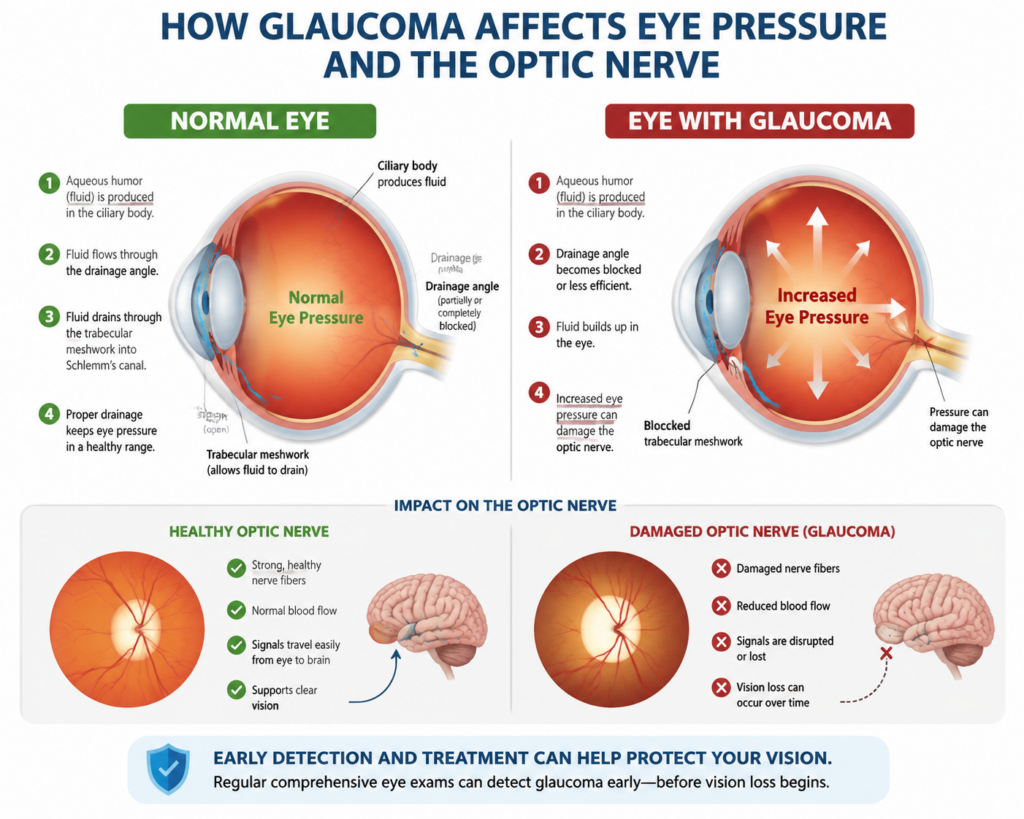
Glaucoma is a group of eye conditions that damage the optic nerve, the connection between the eye and the brain responsible for transmitting visual information.
One of the primary risk factors associated with glaucoma is increased intraocular pressure (IOP), also called eye pressure. When fluid inside the eye does not drain properly, pressure may build and place stress on the optic nerve.
However, glaucoma does not always occur because of high eye pressure alone. Some patients develop optic nerve damage even when their eye pressure readings appear within a typical range. This is why comprehensive evaluations are important.
Common types of glaucoma include:
Open-Angle Glaucoma
Open-angle glaucoma is the most common form and typically develops gradually. The drainage angle remains open, but fluid does not leave the eye efficiently, which may contribute to increased pressure over time.
Angle-Closure Glaucoma
Angle-closure glaucoma occurs when the drainage angle becomes blocked. This type may develop suddenly and can require immediate medical attention.
Because glaucoma-related vision loss often begins in peripheral vision, early diagnosis through comprehensive eye examinations is essential.
Traditional vs Modern Glaucoma Treatments
For many years, glaucoma treatment focused primarily on prescription eye drops and traditional surgical procedures. While these treatments remain important today, advancements in technology have expanded the available options.
Modern glaucoma treatment focuses on creating an individualized plan based on:
- The type of glaucoma
- Current eye pressure levels
- Optic nerve health
- Visual field testing results
- Lifestyle considerations
- Response to previous treatments
The goal of treatment remains the same: lowering eye pressure and reducing the risk of additional optic nerve damage.
Modern approaches may include:
| Treatment Type | Purpose |
| Eye drops | Reduce fluid production or improve drainage |
| Laser treatments | Improve fluid drainage pathways |
| MIGS procedures | Provide additional pressure reduction through minimally invasive techniques |
| Glaucoma surgery | Create new drainage pathways when needed |
No single treatment works best for every patient. An ophthalmologist evaluates each situation carefully before recommending a treatment approach.
Eye Drops and Medication Management
Prescription eye drops are one of the most common modern glaucoma treatment options. These medications work in different ways. Some reduce the amount of fluid produced inside the eye, while others improve fluid drainage to help lower eye pressure.
Common glaucoma medications may include:
- Prostaglandin analogs
- Beta blockers
- Carbonic anhydrase inhibitors
- Alpha agonists
- Combination medications
Using glaucoma medication consistently is an important part of long-term vision protection. Since glaucoma usually does not cause immediate symptoms, patients may not notice when eye pressure increases.
Helpful medication tips include:
- Use drops exactly as prescribed
- Create a daily routine to remember medications
- Tell your eye doctor about other medications you take
- Report side effects rather than stopping medication without guidance
Regular follow-up appointments allow your ophthalmologist to determine whether your current treatment is effectively managing your eye pressure.
Laser Treatments for Glaucoma
Laser therapy has become an important option in how glaucoma is treated today. One commonly used procedure is Selective Laser Trabeculoplasty (SLT). SLT uses targeted laser energy to improve drainage through the eye’s natural drainage system.
Benefits of laser treatment may include:
- Helping lower eye pressure
- Reducing dependence on medications for some patients
- Providing another treatment option for suitable candidates
Laser treatment is performed by an ophthalmologist and typically takes place in an office setting.
The results of laser treatment can vary between patients. Some individuals may continue using eye drops afterward, while others may experience sufficient pressure reduction with laser therapy alone.
The appropriate treatment choice depends on glaucoma type, eye health, and individual needs.
Surgical Options for Advanced Glaucoma
When medications and laser treatments are not enough to control eye pressure, surgical options may be considered to help protect the optic nerve and preserve remaining vision. Glaucoma surgery focuses on improving fluid drainage from the eye or creating a new pathway for fluid movement. The recommended approach depends on the type of glaucoma, disease progression, eye health, and individual treatment goals. An ophthalmologist can evaluate each patient’s condition and determine the most appropriate option.
Minimally Invasive Glaucoma Surgery (MIGS)
MIGS procedures use small devices or techniques designed to improve fluid drainage from the eye. These procedures may be considered for certain patients with mild to moderate glaucoma, sometimes alongside cataract surgery.
Traditional Glaucoma Surgery
For patients who require greater pressure reduction, procedures such as trabeculectomy or glaucoma drainage implants may be recommended.
These surgeries create alternative pathways for fluid drainage, helping reduce pressure inside the eye.
Every surgical option has potential benefits and risks. An ophthalmologist will consider the patient’s glaucoma severity, eye anatomy, and treatment history before recommending surgery.
How Treatments Slow or Prevent Vision Loss
The main goal of glaucoma treatment is protecting remaining vision.
Because glaucoma affects the optic nerve, treatment focuses on reducing factors that may contribute to additional damage. Lowering eye pressure is currently the most proven method for slowing glaucoma progression.
Long-term glaucoma management often involves:
- Maintaining target eye pressure
- Monitoring optic nerve health
- Tracking changes through visual field testing
- Adjusting treatment when necessary
Importance of Early Detection and Monitoring
Glaucoma is sometimes called a “silent” eye disease because noticeable symptoms may not appear until significant damage has occurred. Regular eye examinations can help identify warning signs earlier.
People who may benefit from glaucoma screening include those with:
- Family history of glaucoma
- Increasing age
- Diabetes
- Previous eye injuries
- Long-term steroid use
- Certain ethnic risk factors
An early detection eye exam allows an ophthalmologist to evaluate eye pressure, optic nerve health, and other risk factors.
Role of Regular Eye Pressure Checks
Regular eye pressure checks are an important part of glaucoma monitoring. However, eye pressure is only one part of the diagnosis and management process. Your ophthalmologist may also evaluate:
- Optic nerve appearance
- Retinal nerve fiber layer thickness
- Visual field changes
- Eye drainage angle
Because pressure levels can change over time, ongoing monitoring helps doctors determine whether treatment adjustments are needed.
Who Benefits Most From Modern Treatments?
Modern glaucoma treatments may benefit patients who:
- Have recently been diagnosed with glaucoma
- Need improved eye pressure control
- Experience medication side effects
- Have difficulty maintaining daily eye drop routines
- Show changes despite current treatment
Patients with glaucoma and cataracts may also benefit from discussing combined treatment approaches with their ophthalmologist. The best treatment plan depends on each person’s specific eye health needs.
Future Advancements in Glaucoma Care
Researchers continue studying new approaches to glaucoma management, including:
- Longer-lasting medication delivery systems
- Improved diagnostic imaging
- Artificial intelligence-assisted monitoring
- New surgical technologies
These developments aim to make glaucoma care more personalized and convenient while continuing to focus on protecting vision. The foundation of glaucoma management remains early detection, appropriate treatment, and regular follow-up care.
Key Takeaways
- Glaucoma affects the optic nerve and may progress without noticeable symptoms.
- Modern treatments help manage eye pressure and protect remaining vision.
- Treatment options include eye drops, laser procedures, and surgery.
- Regular monitoring is essential for tracking changes over time.
- Early detection provides more opportunities for effective management.
Conclusion
Glaucoma care has advanced significantly, providing patients with more personalized options for managing eye pressure and protecting long-term vision.
While glaucoma cannot currently be cured, early diagnosis and consistent treatment can help reduce the risk of additional vision loss. Regular eye examinations allow ophthalmologists to monitor changes and adjust treatment when needed.
Southwest Florida Eye Care provides comprehensive glaucoma evaluation and treatment options using modern technology and patient-focused care.
If you have risk factors for glaucoma or are concerned about changes in your vision, scheduling a glaucoma screening appointment can be an important step toward understanding your eye health.
Take the Next Step Toward Protecting Your Vision
Protecting your vision starts with understanding your risk factors and getting appropriate care. Schedule an early detection eye exam with Southwest Florida Eye Care to evaluate your eye health and discuss personalized glaucoma treatment options.
If you have been diagnosed with glaucoma, our experienced team can help you consult a glaucoma specialist and review available approaches for managing your condition.
Book your glaucoma screening appointment today.
Frequently Asked Questions
Can changing my sleep position help manage glaucoma?
Sleep position may influence eye pressure temporarily. Some research suggests that certain sleeping positions, particularly lying face down or with pressure on one side of the face, may affect intraocular pressure. However, sleep position alone is not considered a replacement for glaucoma treatment or monitoring. Discuss any concerns about glaucoma and sleep position with your eye doctor.
How often should someone with glaucoma have eye pressure checked?
The recommended schedule depends on the severity of glaucoma, treatment plan, and how stable the condition is. Some patients may need more frequent visits, especially after starting a new treatment.
Can glaucoma treatment restore vision that has already been lost?
Current glaucoma treatments cannot reverse existing optic nerve damage. The purpose of treatment is to help protect remaining vision and reduce the risk of further damage.
Is laser treatment a permanent solution for glaucoma?
Laser treatment may provide long-term pressure control for some patients, but results vary. Some people may eventually need additional treatments or medication adjustments.
Can younger adults develop glaucoma?
Yes. Although glaucoma is more common with increasing age, younger adults can also develop certain forms of glaucoma. Regular eye evaluations are important for individuals with risk factors.
Disclaimer: The advice in this blog is for general informational purposes only and may not be suited for your exact insurance plan and glaucoma needs. It is important to consult a qualified healthcare professional for personalized advice and treatment.