

Table of Contents
Have you started noticing more glare while driving at night? Maybe your vision seems slightly cloudy, or colors don’t look as vibrant as they once did. These changes can be frustrating, especially when they affect activities you enjoy.
Although several eye conditions can cause these symptoms, cataracts are one possible explanation.
If you’re wondering how to prevent cataracts, the first thing to understand is that there is no guaranteed way to stop them from developing. Most cataracts occur as part of the natural aging process. However, certain lifestyle choices may help lower your risk and support healthier vision over time.
From protecting your eyes against Florida’s strong sunlight to managing diabetes and making nutritious food choices, there are practical steps you can take.
This guide explains cataract risk factors, evidence-supported eye health habits, and when to seek professional care.
Can Cataracts Be Prevented?
Cataracts cannot always be prevented, but certain habits may help reduce your risk. Wearing UV-blocking sunglasses, avoiding smoking, eating a balanced diet, and protecting your eyes from injuries are among the steps recommended by the National Eye Institute.
A cataract develops when the normally clear lens inside your eye becomes cloudy. The lens helps focus light so you can see clearly. As cataracts develop, they may cause blurred vision, increased glare, and difficulty seeing at night.
According to the National Eye Institute, age-related changes in the proteins of the eye’s lens are the primary cause of most cataracts. That means even someone who follows healthy habits throughout life may eventually develop them.
The goal of cataract prevention tips is therefore to address modifiable risks, not promise that cataracts will never occur.
What Increases Your Risk of Developing Cataracts?
Some cataract risk factors cannot be changed. Others are influenced by your health, environment, and everyday activities.
| Risk factor | What it means for your eyes | What you can do |
| Aging | Natural changes in the lens increase cataract risk. | Follow recommended eye examination schedules. |
| Family history | Genetics may influence susceptibility. | Tell your eye doctor about your family history. |
| UV exposure | Excessive sunlight exposure is associated with cataract formation. | Wear UV-blocking sunglasses and a brimmed hat. |
| Smoking | Tobacco use increases cataract risk. | Seek support to quit smoking. |
| Diabetes | Diabetes can contribute to earlier cataract development. | Follow your diabetes management plan. |
| Excessive alcohol use | Heavy alcohol consumption is associated with cataract risk. | Limit excessive consumption. |
| Eye injuries | Trauma can damage the lens. | Use appropriate protective eyewear. |
| Corticosteroid medications | Certain steroid treatments may increase cataract risk. | Discuss monitoring and medication risks with your clinician. |
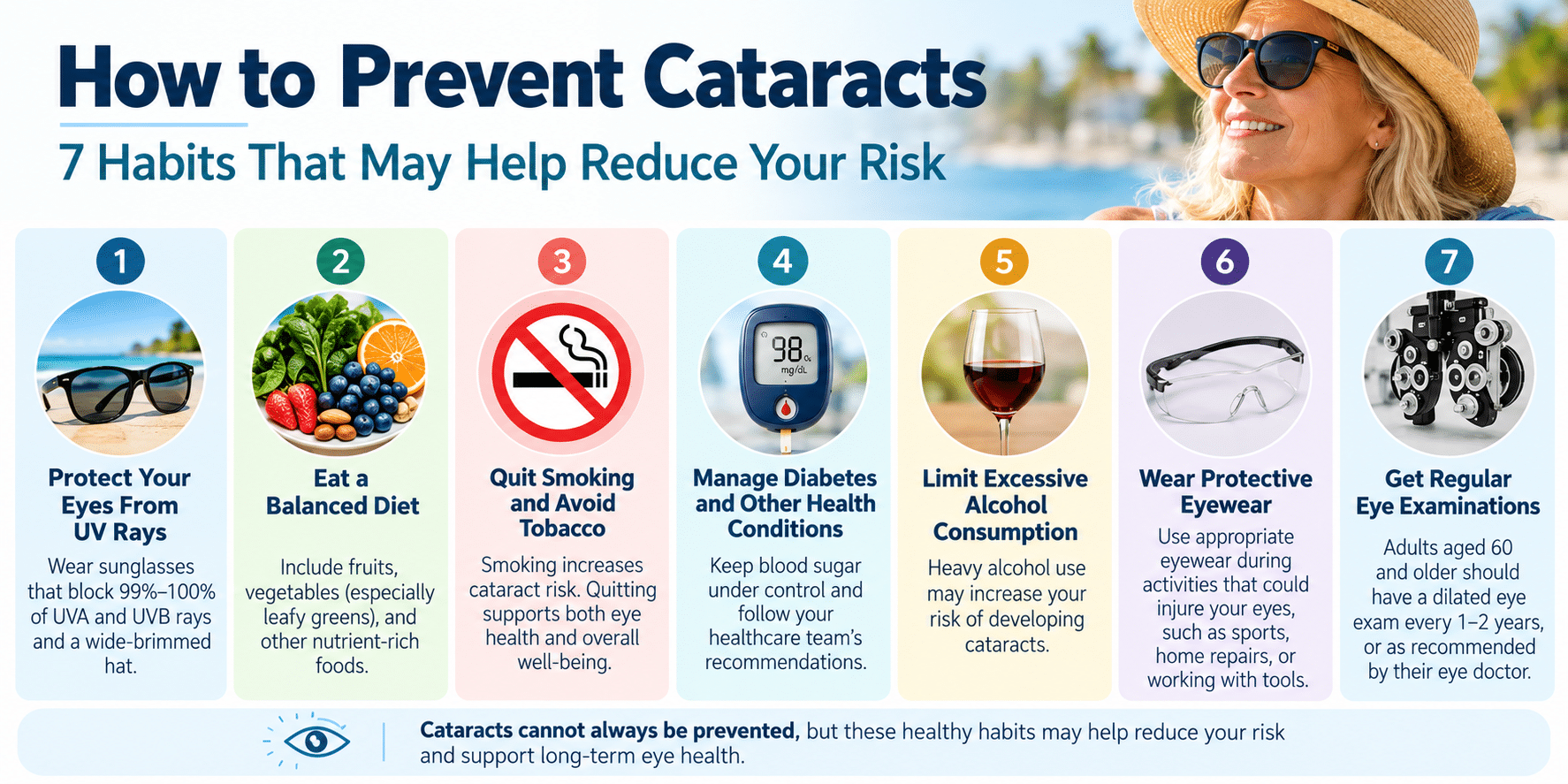
How to Prevent Cataracts: 7 Habits That May Help Reduce Your Risk
To help reduce cataract risk, protect your eyes from UV rays, eat a balanced diet, avoid smoking, manage diabetes, limit alcohol, wear protective eyewear, and get regular eye exams. While these healthy habits cannot guarantee cataract prevention, they can support long-term eye health and help protect your vision as you age.
1. Protect Your Eyes From UV Radiation
Sun protection is one of the most practical eye-health habits, especially for people living in Southwest Florida. Whether you’re walking along the beach, boating, gardening, or golfing, your eyes may be exposed to ultraviolet radiation.
The National Eye Institute recommends sunglasses that block 99%–100% of UVA and UVB radiation to help protect your eyes and lower cataract risk.
Look for sunglasses labeled UV400 or 100% UV protection. A wide-brimmed hat can provide additional protection. Polarized lenses may reduce glare from roads, sand, and water, but polarization alone doesn’t guarantee adequate UV protection.
For more guidance, read Southwest Florida Eye Care’s article on choosing the right UV protection lenses for Florida sunlight.
Quick tip: Keep sunglasses where you’ll remember them, such as beside your keys or in your everyday bag.
2. Eat Foods That Support Eye Health
A balanced diet provides nutrients that support normal eye function and overall health.
Foods containing antioxidants, including vitamins C and E, are often discussed in relation to age-related eye health. However, research has not shown that eating a specific food prevents cataracts.
Instead of focusing on a single nutrient, aim for a varied diet that includes:
- Leafy greens such as spinach, kale, and collard greens.
- Fruits such as oranges, berries, and kiwi.
- Vegetables such as broccoli and bell peppers.
- Nuts, seeds, and whole grains.
- Fish and other nutritious protein sources.
The NEI recommends a diet rich in fruits, vegetables, leafy greens, nuts, and whole grains as part of its cataract prevention guidance.
A simple approach is to include different colors of vegetables and fruits throughout the week.
For more ideas, explore our guide to foods and nutrients that support eye health.
3. Quit Smoking and Avoid Tobacco
Smoking is a recognized risk factor for cataracts. Tobacco exposure contributes to oxidative stress, which is associated with damage to cells and tissues throughout the body. Avoiding tobacco benefits both eye health and overall well-being.
If you currently smoke, speak with your healthcare provider about a cessation plan. Counseling, medications, and support programs can make quitting easier.
You don’t need to wait for eye symptoms to make this change. Reducing tobacco exposure is worthwhile whether or not cataracts are already present.
4. Manage Diabetes and Other Health Conditions
Diabetes is an important risk factor for cataracts. People with diabetes may develop cataracts earlier than those without the condition.
If you have diabetes, follow your healthcare team’s recommendations for blood sugar management, medications, nutrition, and physical activity.
Regular dilated eye examinations are also important because diabetes can affect the retina and other parts of the eye.
Although managing diabetes can’t prevent cataracts, it supports long-term eye health and reduces the risk of other diabetes-related complications.
For more information, read How Diabetes Affects Your Eyes: Early Warning Signs to Know.
5. Limit Excessive Alcohol Consumption
Drinking excessive amounts of alcohol is associated with cataract risk.
If you consume alcohol, discuss appropriate limits with your healthcare provider, especially if you take medications or manage chronic health conditions.
There is no established amount of alcohol that guarantees cataract prevention. The practical goal is to avoid excessive consumption and maintain healthy daily routines.
6. Wear Protective Eyewear During Risky Activities
Not all cataracts develop with age.
A serious eye injury can damage the natural lens and contribute to a traumatic cataract. In some cases, lens clouding may develop well after the original injury.
Use appropriate protective eyewear when working with power tools, doing home repairs, handling chemicals, or participating in sports that risk eye injury.
Choose safety glasses or goggles designed for the specific activity. Ordinary sunglasses may not provide adequate impact protection.
7. Maintain Regular Eye Examinations
Regular eye examinations do not stop cataracts from forming. However, they can identify changes in your lens and help your eye care professional monitor your vision. Cataracts often develop gradually, and early symptoms may be subtle.
During a comprehensive exam, an ophthalmologist or optometrist can assess your vision and look for signs of cataracts and other conditions.
The National Eye Institute recommends that adults aged 60 and older receive a dilated eye examination every one to two years. Your individual schedule may differ depending on symptoms, medical history, and other eye conditions.
If your vision changes between appointments, contact your eye care professional rather than waiting for your next scheduled visit.
Can Vitamins, Supplements, or Eye Drops Prevent Cataracts?
No vitamin, supplement, or eye drop has been shown to reliably prevent or reverse age-related cataracts.
This distinction matters because supplements marketed for eye health are sometimes mistaken for cataract treatments.
The National Eye Institute’s Age-Related Eye Disease Studies (AREDS and AREDS2) investigated whether nutritional supplements could affect cataracts and age-related macular degeneration.
The studies found that the tested formulations did not have an overall beneficial effect on cataracts. Certain formulations can help selected patients with age-related macular degeneration, but those findings should not be applied to cataract prevention.
Eating a balanced diet remains worthwhile. However, taking high-dose supplements without medical guidance is not a substitute for established eye care.
If you are considering vitamins or other products for your vision, discuss them with your healthcare provider.
How Do You Know if Cataracts Are Developing?
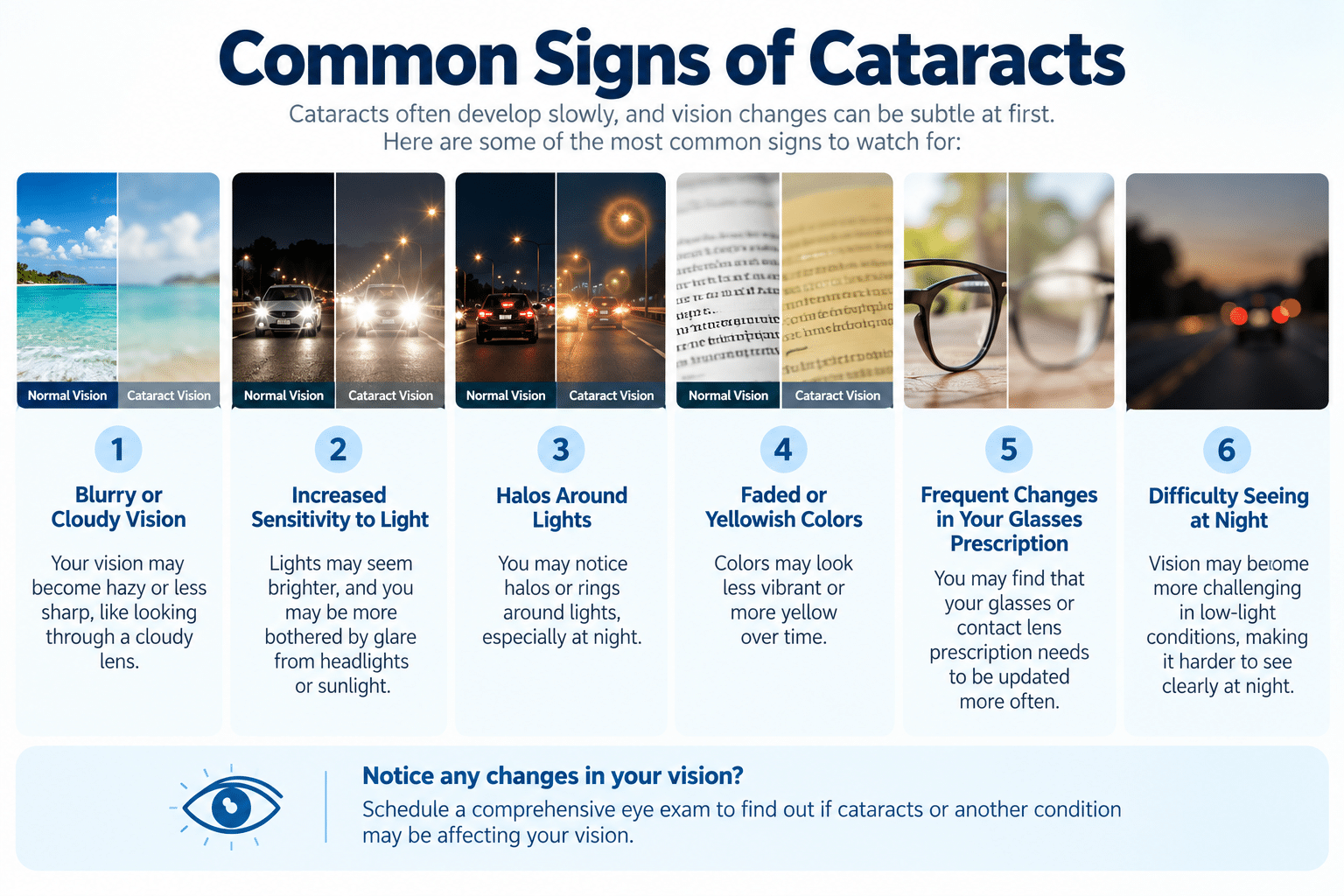
Cataracts may develop slowly, making early changes easy to overlook.
Common symptoms include:
- Blurry, cloudy, or hazy vision.
- Increased sensitivity to glare.
- Difficulty seeing while driving at night.
- Halos around lights.
- Colors appearing faded or yellowish.
- Frequent changes in eyeglass prescriptions.
- Needing brighter lighting to read.
These symptoms do not automatically mean you have cataracts. Other eye conditions can produce similar changes.
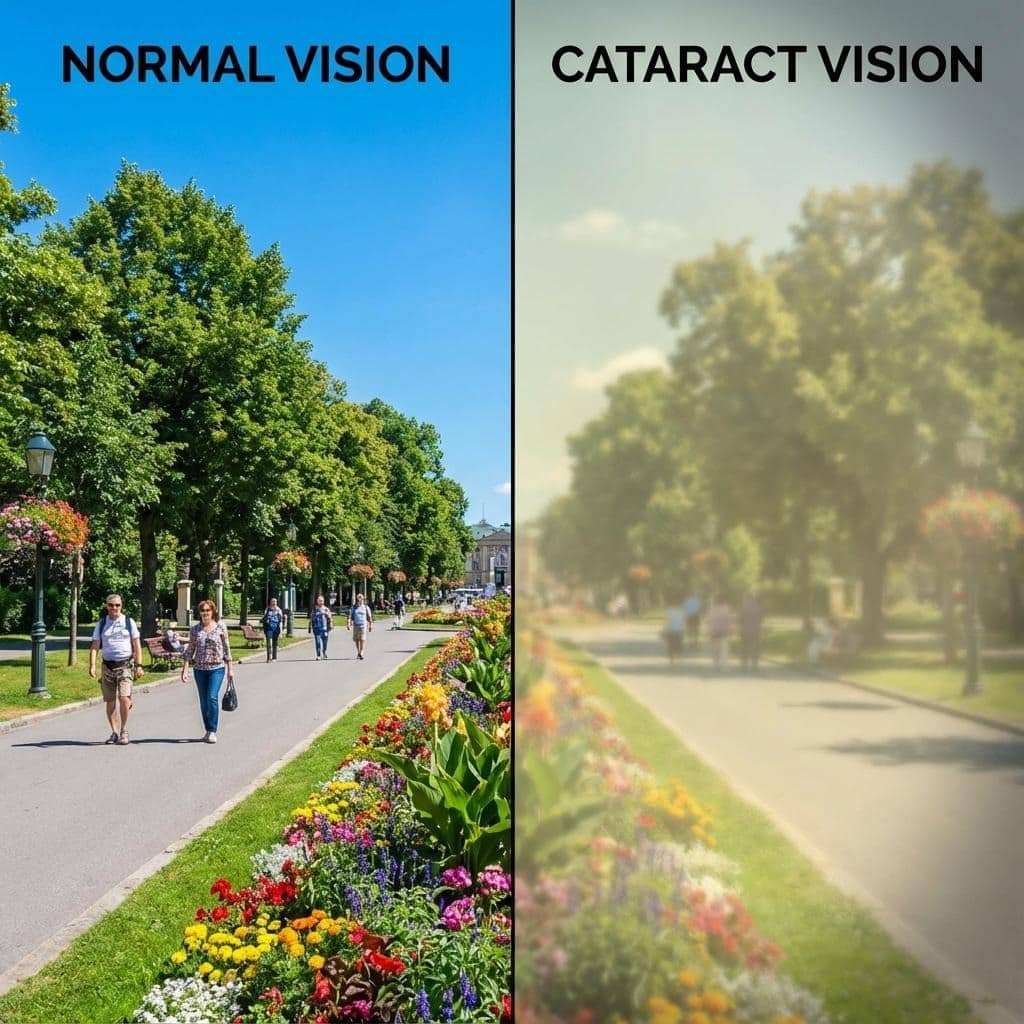
An eye examination is necessary to identify the cause. The American Academy of Ophthalmology provides additional guidance on cataract symptoms and diagnosis.
Sudden vision loss, severe eye pain, or abrupt vision changes require urgent medical attention.
What Should You Do if You Already Have Cataracts?
If you’ve been diagnosed with cataracts, healthy lifestyle habits are still valuable. However, they cannot remove cloudiness that has already developed in the lens.
In the early stages, your eye care professional may recommend adjustments such as updated glasses, brighter reading lights, or glare-management strategies.
As cataracts progress, they may interfere with activities such as reading, driving, or recognizing faces.
When these difficulties become significant, your ophthalmologist may recommend cataract surgery.
When Is Cataract Surgery Considered?
Cataract surgery is generally considered when lens cloudiness affects everyday activities or when removing the cataract is needed for other medical reasons.
During the procedure, doctors remove the cloudy natural lens and replace it with an artificial intraocular lens.
Southwest Florida Eye Care offers laser cataract surgery for eligible patients in Fort Myers, Naples, and Cape Coral.
Laser-assisted cataract surgery uses laser technology for selected steps of the procedure. Your ophthalmologist can explain the available surgical approaches and help you decide which may be right for your eyes.
The decision depends on your examination findings, visual needs, and overall eye health.
Key Takeaways
- UV-blocking sunglasses and appropriate protective eyewear can help reduce avoidable eye risks.
- Cataracts cannot always be prevented because aging and genetics play important roles.
- Avoiding smoking, limiting excessive alcohol use, and managing diabetes may help reduce certain cataract risk factors.
- A balanced diet supports general health, but no particular food guarantees cataract prevention.
- Eye vitamins and supplements have not been shown to reliably prevent cataracts.
- Regular eye exams help identify cataracts and monitor vision changes.
- Cataract surgery may be considered when cataracts interfere with daily activities.
Build Healthy Habits to Protect Your Vision
Reducing cataract risk starts with recognizing what you can control.
Although you cannot prevent every age-related change in your eyes, simple habits can support your vision over time. Wearing UV-protective sunglasses, avoiding smoking, choosing nutritious foods, managing chronic health conditions, and protecting your eyes from injuries are meaningful steps.
Regular eye examinations are equally important for understanding changes in your vision and identifying when additional care may be needed.
At Southwest Florida Eye Care, our team helps patients evaluate cataract symptoms, understand their eye health, and explore treatment options appropriate for their individual needs.
Frequently Asked Questions
Can cataracts be prevented naturally?
No proven natural method completely prevents cataracts. However, wearing UV-blocking sunglasses, avoiding smoking, eating a balanced diet, and managing certain health conditions may help reduce your risk.
Can drinking more water prevent cataracts?
Staying hydrated supports overall health, but drinking extra water hasn’t been proven to prevent cataracts. Cataract risk is more strongly associated with factors such as aging, genetics, diabetes, smoking, and UV exposure.
Can eye exercises prevent cataracts?
No. Eye exercises have not been shown to prevent or reverse cataracts. Cataracts develop within the eye’s natural lens, and exercises cannot remove lens cloudiness.
Can cataracts go away without surgery?
No. Cataracts do not disappear through diet changes, supplements, or eye exercises. Glasses and improved lighting may help manage certain symptoms, but surgery is the established treatment for removing a visually significant cataract.
At what age should you start protecting your eyes from cataracts?
Healthy eye habits are beneficial at every age. The NEI explains that age-related changes in lens proteins can begin around age 40, although noticeable cataracts often develop later. Starting UV protection and other healthy habits early is sensible.
Schedule a Cataract Evaluation at Southwest Florida Eye Care
Are cloudy vision, glare, or nighttime driving difficulties affecting your daily routine?
A professional eye exam can help determine whether cataracts or another condition is responsible.
Southwest Florida Eye Care provides cataract evaluations and personalized treatment planning for patients in Fort Myers, Naples, and Cape Coral.
Medical disclaimer: This article provides general educational information and is not a substitute for individualized medical advice, diagnosis, or treatment. Consult a qualified eye care professional about your specific eye health concerns.