
Table of Contents
Most people know that eating well is good for their heart and their weight. But very few think about what the food on their plate does for their vision. The truth is, your eyes need specific nutrients every single day to stay healthy, and the wrong diet can silently damage them long before any symptom shows up.
Age-related macular degeneration (AMD), glaucoma, diabetic retinopathy, and cataracts are all asymptomatic in their early stages. That means you can have real, measurable damage happening inside your eye and feel completely fine. Diet is one of the few controllable factors that research consistently links to the rate at which these diseases progress.
This guide covers the best foods for eye health, the nutrients your eyes actually depend on, and the foods you should limit starting today.
What Nutrients Do Your Eyes Actually Need?
Before getting to the food list, it helps to understand the six nutrients the American Optometric Association identifies as most critical for protecting eyesight:
| Nutrient | Primary Eye Benefit | Top Food Sources |
| Lutein & Zeaxanthin | Protect the macula from light damage | Kale, spinach, eggs |
| Omega-3 Fatty Acids | Support retinal structure | Salmon, sardines, mackerel |
| Vitamin C | Slows cataract and AMD progression | Oranges, bell peppers, strawberries |
| Vitamin E | Protects cells from oxidative stress | Almonds, sunflower seeds, avocado |
| Zinc | Keeps the retina healthy, aids night vision | Beans, oysters, lean meat |
| Vitamin A / Beta-Carotene | Supports the cornea, critical for low-light vision | Carrots, sweet potatoes |
Quick Fact: The body does not produce lutein or zeaxanthin on its own. You must get them entirely from food. They are the only carotenoids found in the human retina and lens.
12 Best Foods for Healthy Eyes
Diet is not a substitute for medical eye care, but it is the only daily intervention that directly influences the structural health of your retina, lens, and optic nerve. The foods below are backed by clinical research and recommended by leading institutions including the American Academy of Ophthalmology.
Each one delivers a specific set of nutrients that address real, documented mechanisms of eye disease.
1. Kale and Spinach
Lutein and zeaxanthin are antioxidants found in the pigments of leafy green vegetables and other brightly colored foods. They are key to protecting the macula, the area of the eye that gives us our most detailed central vision.
Kale has one of the highest concentrations of both nutrients of any food. One cup of cooked kale delivers roughly 20 mg of lutein and zeaxanthin combined. Most adults average well under 2 mg per day, which explains why AMD remains the leading cause of vision loss in Americans over 50.
Practical tip: Lightly cooking spinach in olive oil increases lutein bioavailability because these carotenoids are fat-soluble.
2. Salmon and Fatty Fish
Observational data suggest that people who consume ample dietary sources of omega-3 polyunsaturated fatty acids, especially from fatty fish, have a reduced risk of developing AMD.
The retina has a very high concentration of DHA, a specific omega-3 fatty acid. Without enough DHA, the structural integrity of retinal cells weakens over time. Cold-water fish like salmon, sardines, and mackerel are the most efficient dietary sources.
Target: Two servings of fatty fish per week is the standard recommendation.
3. Eggs
Eggs are a dual-action food for eye health. They contain both lutein and zeaxanthin, but in a fat-containing yolk that makes absorption significantly higher than from plant sources alone. They also supply zinc, which helps transport vitamin A from the liver to the retina.
Tip: One egg yolk per day can meaningfully raise macular pigment density, which is a measurable protective factor against AMD progression.
4. Citrus Fruits and Bell Peppers
Foods rich in vitamins C and E, zinc, lutein and zeaxanthin are a great way to boost eye health. Some of these nutrients may protect vision in people with cataracts or glaucoma.
Vitamin C is found in the aqueous humor of the eye at concentrations far higher than in the blood, which suggests the eye actively concentrates it for a protective reason. Red bell peppers have more vitamin C per serving than oranges, making them one of the most efficient sources for eye health.
5. Almonds and Sunflower Seeds
Vitamin E can be found in avocados, almonds, and sunflower seeds. Vitamin E is a fat-soluble antioxidant that protects the fatty membranes of retinal cells from oxidative damage caused by light exposure, pollution, and normal metabolic processes. A handful of almonds (about 23 nuts) covers roughly 37% of your daily vitamin E needs.
6. Sweet Potatoes and Carrots
Vitamin A is required to produce rhodopsin, the photosensitive protein in rod cells that allows low-light and night vision. A deficiency of zinc can result in poor night vision and lead to cataracts. Vitamin A deficiency is the leading preventable cause of blindness in children worldwide. Sweet potatoes deliver more beta-carotene per serving than carrots and are one of the most nutrient-dense foods for eye health overall.
7. Beans and Lentils
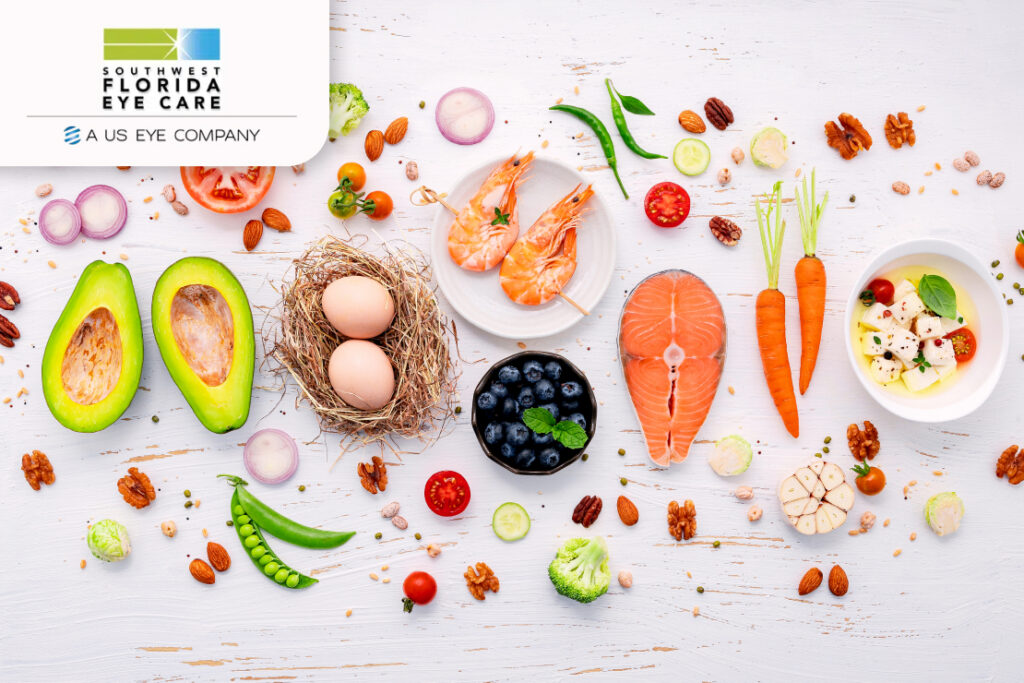
All kinds of beans, including black-eyed peas, kidney beans and lima beans, contain zinc, an essential trace mineral that is found in high concentration in the eyes.
Zinc plays a specific role in the enzyme activity needed to protect retinal cells from damage caused by light. It also works as a co-factor that helps vitamin A convert into melanin, the protective pigment in the retina. For adults who do not eat meat or seafood, beans are a critical zinc source.
8. Broccoli
Broccoli is a simple but powerful addition to an eye-healthy diet because it delivers lutein, zeaxanthin, and vitamin C in one vegetable. These nutrients help protect the eyes from oxidative stress, which plays a role in long-term vision changes.
Broccoli also contains sulforaphane, a plant compound that research links to protection against light-related retinal stress. Adding steamed or lightly sautéed broccoli to meals is an easy way to support both eye health and overall wellness.
9. Chia Seeds
Chia seeds are a plant-based source of ALA omega-3 fatty acids. While they are not as potent as fish-based DHA, they are still a helpful option for people who do not eat seafood or want more plant-based nutrition in their diet.
They can be added to smoothies, oatmeal, yogurt, or salads without changing the meal much. Their fiber content also supports better blood sugar balance, which matters for people concerned about diabetic eye disease.
10. Blueberries
Blueberries are rich in anthocyanins, the plant pigments that give them their deep blue color. These compounds support healthy circulation, including the tiny blood vessels that supply the retina and optic nerve.
Because poor circulation can affect long-term eye health, blueberries are a smart fruit choice for vision support. They are also easy to include in breakfast, snacks, or smoothies without adding heavily processed sugar.
11. Oysters
Oysters are one of the richest natural sources of zinc, a mineral found in high concentration in the eyes. Zinc helps support retinal function and plays a role in moving vitamin A from the liver to the retina.
Because one serving of oysters can provide far more than the daily zinc requirement, they do not need to be eaten often to make an impact. For people who eat seafood, oysters can be a highly efficient way to support eye nutrition.
12. Avocados
Avocados provide vitamin E and lutein, both of which help protect eye cells from oxidative stress. Their healthy fats also improve the absorption of fat-soluble nutrients, including lutein, zeaxanthin, and beta-carotene from other foods.
This makes avocados especially useful when paired with leafy greens, carrots, or bell peppers. Adding avocado to a salad or vegetable-based meal can help your body absorb more of the nutrients your eyes need.
How Certain Foods Support Different Eye Conditions
Not all eye diseases share the same nutritional risk profile. Glaucoma involves optic nerve pressure and vascular health. AMD is driven largely by oxidative stress and macular pigment depletion. Diabetic retinopathy is tied directly to blood sugar management. Cataracts accelerate under chronic oxidative damage. Matching your food choices to your personal risk factors makes your diet a much more targeted and effective tool for vision protection.
| Disease | Key Dietary Risk Factor | Protective Foods |
| Age-Related Macular Degeneration | Low lutein/zeaxanthin intake, high glycemic diet | Kale, spinach, eggs, fatty fish |
| Glaucoma | Oxidative stress, poor vascular health | Leafy greens, blueberries, green tea |
| Diabetic Retinopathy | Poor blood sugar control, high-GI foods | Low-GI whole foods, fiber-rich vegetables |
| Cataracts | Oxidative damage, smoking, low antioxidant diet | Citrus, bell peppers, almonds, broccoli |
Worst Foods for Eye Health
Knowing the best foods for eye health matters, but so does knowing what works against them. Consistently poor nutrition accelerates the very diseases that start silently.
Avoid or limit these:
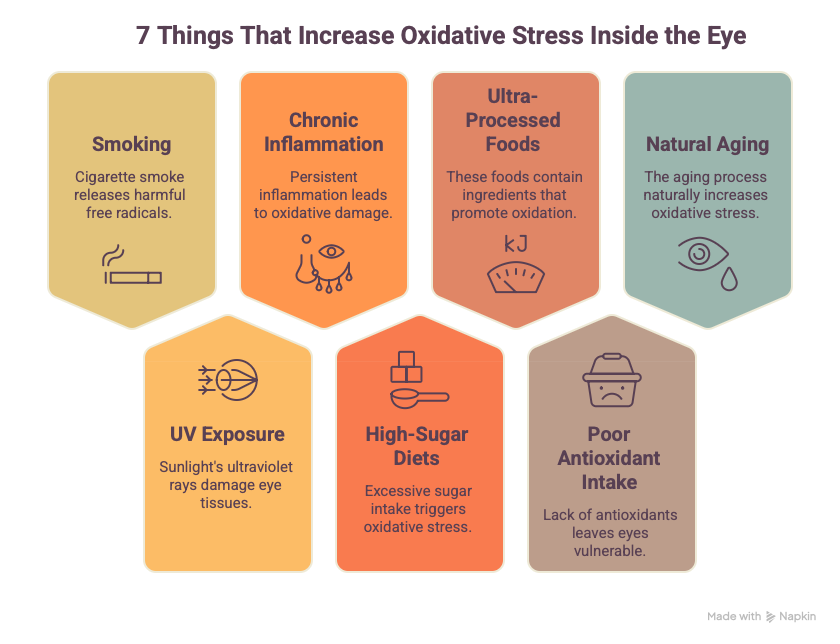
- Refined sugars and white carbs – Raise blood glucose levels and promote retinal blood vessel damage, the core mechanism behind diabetic retinopathy. High-glycemic diets are also associated with faster AMD progression.
- Trans fats (partially hydrogenated oils) – Found in many processed snacks and fried fast foods. They displace omega-3 fats in cell membranes and promote inflammation in retinal tissue.
- Excessive sodium – Drives up blood pressure, which stresses the small vessels in the optic nerve and increases glaucoma risk over time.
- Alcohol – Depletes B vitamins including folate and B12, both of which are involved in optic nerve function.
- Ultra-processed foods – A prospective cohort study with 19,255 participants published in 2024 found an association between high ultra-processed food intake and increased glaucoma risk.
Key Takeaways
- Lutein and zeaxanthin are the only carotenoids in the retina and must come entirely from food
- Omega-3 fatty acids from fatty fish directly support retinal cell structure
- Refined sugar, trans fats, and ultra-processed foods are among the worst foods for eye health for long-term vision
- A Mediterranean-style eating pattern is the single best dietary framework for comprehensive eye protection
- Diet protects against silent, asymptomatic eye diseases like glaucoma and AMD before symptoms ever appear
- No supplement replaces a whole-food diet, though AREDS2 formulas are recommended for diagnosed AMD patients
Conclusion
Diet is one of the most powerful and most underused tools for protecting long-term vision. The foods for eye health are not complicated. Fatty fish, leafy greens, eggs, citrus, nuts, and legumes cover the core nutrients your retina, macula, and optic nerve need. Cutting back on the worst foods for eye health, including processed snacks, refined sugars, and excessive sodium, removes active damage drivers. Both sides of that equation matter.
At Southwest Florida Eye Care, we are proud to serve patients across Fort Myers, Cape Coral, and Naples, FL, with comprehensive eye care including eye exams for seniors that goes beyond prescription checks. Our physicians understand that vision protection is a daily commitment, and we partner with our patients to build it.
Frequently Asked Questions
Can omega-3 supplements replace eating fish for eye health?
Fish-derived supplements (EPA and DHA) are better absorbed than plant-based ALA supplements. However, research consistently shows that whole food sources deliver omega-3s in a matrix with other nutrients that supplements cannot fully replicate. Supplements are a reasonable backup, not a first choice.
How much lutein do I need daily for eye protection?
Most eye health researchers reference 10 mg of lutein and 2 mg of zeaxanthin per day as a target associated with meaningful macular pigment density. A single cup of cooked kale can get you close to that on its own.
Does coffee affect eye health positively or negatively?
Moderate coffee consumption has been associated with lower intraocular pressure in some studies, which is relevant for glaucoma risk. However, excessive caffeine can temporarily raise eye pressure in some individuals. The research is not conclusive enough to recommend coffee as an eye health strategy.
Are there foods that specifically help with dry eye symptoms?
Yes. Omega-3 fatty acids reduce inflammatory markers linked to meibomian gland dysfunction, which is the most common cause of evaporative dry eye. Consistent intake of fatty fish or high-quality fish oil supplements has clinical support for reducing dry eye severity.
At what age should I start eating with my eye health in mind?
Now, regardless of your age. The deposits that lead to AMD (called drusen) begin forming decades before vision loss occurs. The macular pigment that protects against those deposits is built through years of consistent lutein and zeaxanthin intake. Starting in your 30s or 40s has a measurably better outcome than starting after a diagnosis.
Is It Time to Schedule Your Eye Exam?
Diet protects your eyes between visits, but it does not replace what a clinical exam can detect. Conditions like glaucoma, early AMD, and diabetic retinopathy are found on examination, often years before any vision change. An adult eye exam can catch measurable changes in retinal structure, intraocular pressure trends, and macular pigment density that no symptom will alert you to first.
If it has been more than a year since your last visit, a comprehensive eye exam is the next right step. Contact Southwest Florida Eye Care in Fort Myers, Cape Coral, or Naples, FL to schedule today.