Table of Contents
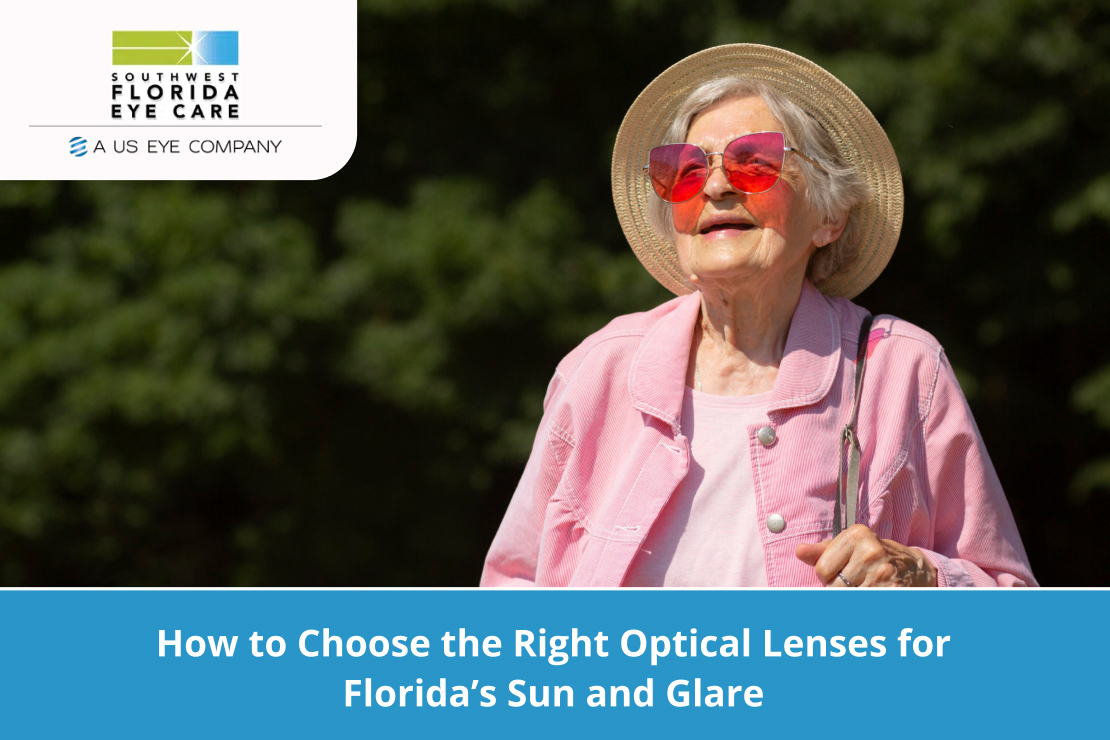
Do your eyes feel strained, tired, or uncomfortable every time you step outside in Florida’s bright sun?
Florida is not just sunny, it is intense. With over 230 sunny days a year, high humidity, and strong UV exposure, your eyes are constantly under stress. The combination of beautiful sunlight reflecting off water, sand, and roads creates extreme glare that affects daily comfort, driving safety, and long-term eye health.
This is why choosing the best optical lenses for sun glare is not just about comfort; it is about protection. In this guide, you will learn how Florida’s environment affects your eyes, what types of lenses actually work, and how to choose the right solution for your lifestyle.
Why Is Florida’s Sun So Challenging for Your Eyes?
Florida’s location and climate create extreme glare and high UV exposure. Humidity and reflective surfaces increase light intensity. This combination makes eye protection essential for daily comfort and safety.
Florida’s proximity to the equator results in a very high UV index throughout the year. This means your eyes are exposed to stronger ultraviolet radiation compared to many other regions.
But the challenge does not stop there.
- Humidity: Humidity levels often exceed 90%, creating a haze that scatters light and increases glare. Even on cloudy days, this haze can make visibility uncomfortable.
- Weather Impact: There is also what experts call the “double heat factor.” Direct sunlight combined with humidity creates both brightness and visual distortion.
- Driving Risk: Sun glare while driving can temporarily reduce visibility, increasing the risk of accidents and eye fatigue.
- Indoor Impact: Strong sunlight can fade furniture and increase indoor brightness, requiring UV-blocking solutions for windows and interiors.
Quick Fact: Water, sand, and white surfaces can reflect UV rays, almost doubling exposure to your eyes.
How Does Florida’s Environment Affect Eye Health?
Florida’s climate exposes eyes to constant UV radiation, allergens, and dryness from air conditioning. These factors increase the risk of irritation and long-term eye damage. Protection is necessary for both short-term comfort and long-term health.
Florida’s environment affects your eyes in multiple ways, not just sunlight.
- UV Exposure and Cumulative Damage – Long-term exposure to UV-A and UV-B rays increases the risk of cataracts, macular degeneration, and other eye conditions.
- Reflection from Surfaces – Beaches and water reflect sunlight directly into your eyes, increasing intensity.
- Air Conditioning Effects – Moving from humid outdoor air into cold indoor environments can cause dry-eye symptoms such as burning and irritation.
- Allergens and Irritants – Pollen, dust, and mold are common due to the warm climate, leading to itchy and watery eyes.
- Water Exposure – Swimming pools and ocean water can remove the protective tear layer, causing redness and discomfort.
Tip: Always carry sunglasses and artificial tears when spending long hours outdoors.
What Are the Risks of UV Exposure to Your Eyes?
UV exposure can cause both short-term discomfort and long-term eye damage. Conditions such as cataracts and photokeratitis are associated with prolonged exposure. Proper protection is essential to reduce these risks.
UV radiation affects your eyes in ways you may not immediately notice.
Short-term exposure can cause photokeratitis, which is essentially a sunburn of the eye. This can lead to pain, redness, and temporary vision issues.
Long-term exposure increases the risk of:
- Cataracts
- Macular degeneration
- Growths on the eye surface
This is why UV protection lenses are critical in Florida’s climate. They block harmful rays and reduce cumulative damage over time.
How Does Glare from Water, Sand, and Roads Impact Vision?
Glare happens when bright light reflects off surfaces such as water, sand, or roads and scatters into the eyes. This can reduce contrast, make details harder to see, and cause visual discomfort.
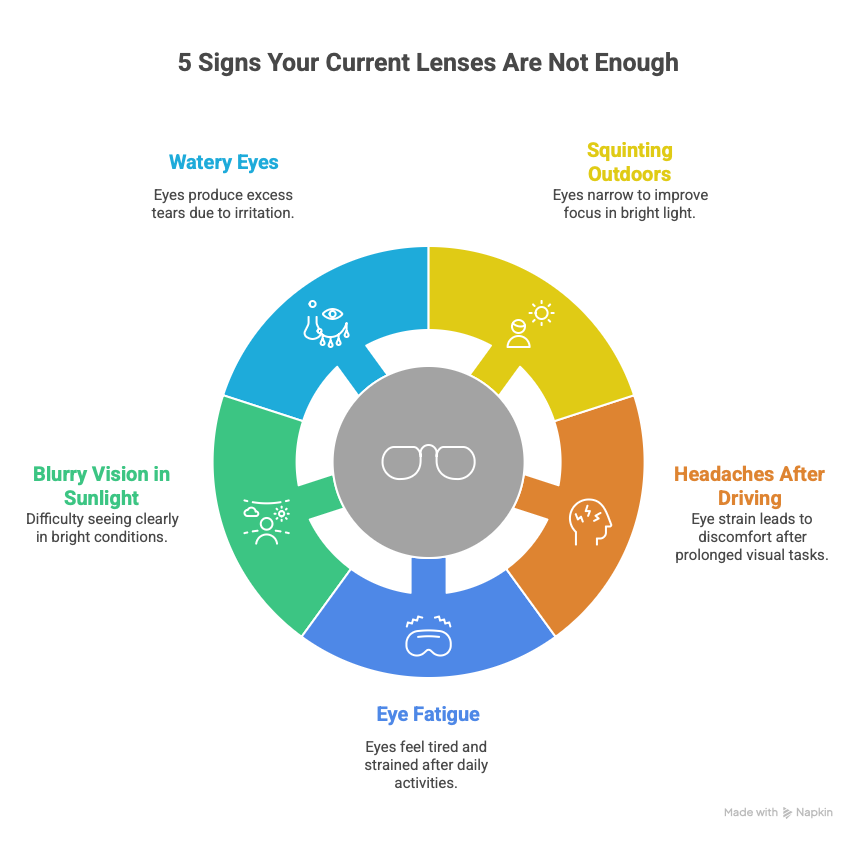
In sunny areas like Florida, glare can become a daily issue, especially while driving, spending time near the beach, or being outdoors for long periods. Strong reflected light may lead to:
- Reduced contrast
- Eye strain
- Squinting and discomfort
- Brief difficulty seeing clearly while driving
Using glare-reducing lenses, especially polarized lenses, can help limit reflected light, improve clarity, and make outdoor vision more comfortable.
Quick Fact: Polarized lenses are designed to reduce horizontal reflections, which are a major source of glare from roads, water, and sand.
What Types of Optical Lenses Work Best in Florida?
For Florida’s intense sun and reflective environment, the best lenses combine UV protection, glare reduction, and durability. Options like polarized, polycarbonate, and photochromic lenses address different daily needs. Choosing the right combination improves both comfort and long-term eye safety.
Florida’s environment is not normal when it comes to light exposure. You are dealing with strong UV rays, constant glare from surfaces like water and roads, and high humidity, all of which affect lens performance.
This means a single feature is not enough. The best optical lenses for sun glare are those that combine multiple technologies to handle real-world conditions.
Here are the most effective lens types recommended for Florida:
- Polarized Sun Lenses – Essential for reducing glare from reflective surfaces like water, sand, and asphalt. They improve contrast and reduce eye strain, especially while driving or spending time outdoors.
- Polycarbonate Lenses – These lenses are lightweight, highly durable, and naturally block 100% UV rays. They are ideal for active lifestyles and offer strong protection against impact and sunlight.
- Photochromic Lenses (Transitions) – These lenses automatically darken in sunlight and return to clear indoors. They are useful for people who frequently move between indoor and outdoor environments, although they may not fully activate inside cars.
- High-Index Lenses – For people with higher prescriptions, these lenses are thinner and lighter. In hot and humid climates like Florida, they improve comfort and prevent glasses from slipping due to sweat.
- Mirrored Lenses – These lenses reflect light away from the eyes, making them useful in extremely bright conditions such as beaches or open roads. They reduce light intensity and improve visual comfort.
Read Also: Different Types of Optical Lenses
Essential Lens Treatments You Should Not Ignore
Lens type alone is not enough. Coatings and treatments play a major role in performance.
- UV Protection – High-quality UV protection lenses block 100% of UVA and UVB rays, preventing long-term eye damage such as cataracts and retinal issues.
- Anti-Reflective Coating – This coating reduces internal reflections, improving clarity, especially in bright environments and during driving.
- Hydrophobic Coating – Florida’s humidity and sudden rain make this coating important. It repels water and prevents fogging or smudging.
- Scratch-Resistant Coating – Protects lenses from daily wear and tear, especially important for plastic lenses.
What Actually Works Best in Real Life?
In Florida, the most effective solution is not one lens type, but a combination.
A high-performing setup usually includes:
- Polarized lenses for glare control
- Built-in UV protection for safety
- Anti-reflective coating for clarity
- Hydrophobic coating for humidity
This combination ensures your lenses perform well whether you are driving, at the beach, or simply walking outdoors.
Insight: If your lenses only reduce brightness but do not block UV or glare properly, they are not protecting your eyes; they are only making things look darker.
Why Are Polarized Lenses Essential for Glare Reduction?
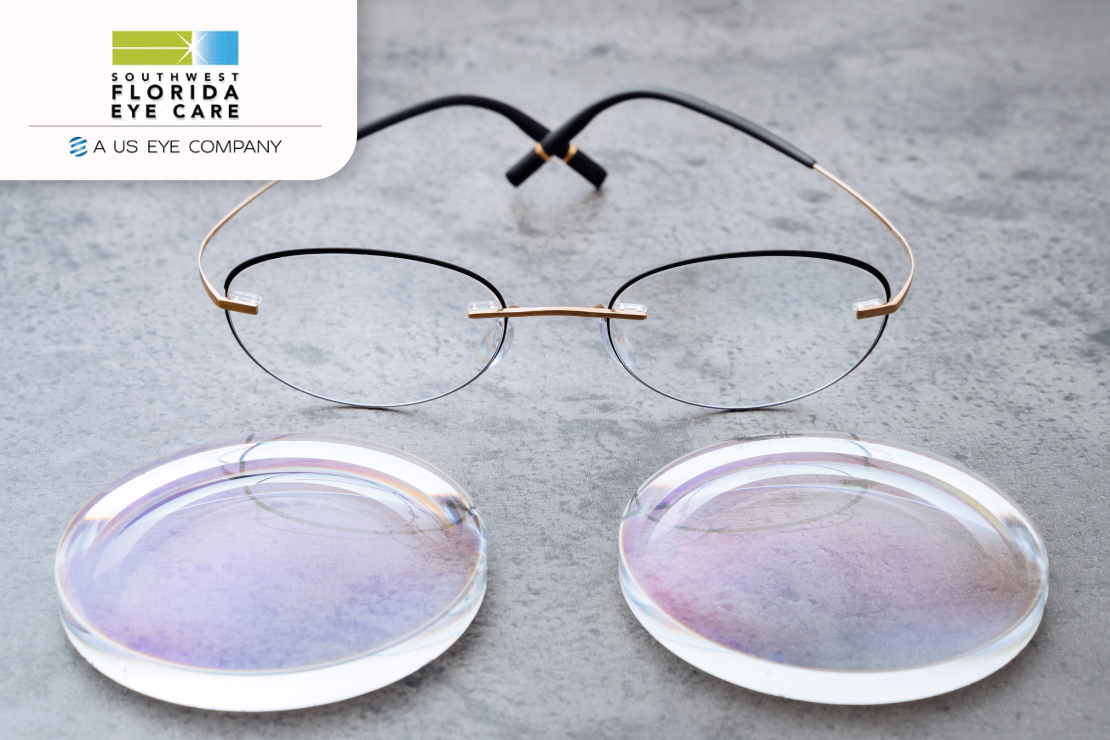
Polarized lenses reduce glare by filtering reflected light. They improve clarity and reduce eye strain. These lenses are especially useful in bright environments, such as Florida.
Polarized lenses are one of the most effective solutions for glare.
They work by blocking horizontal light waves that cause reflections from surfaces like water and roads.
Benefits include:
- Clearer vision
- Reduced eye strain
- Better contrast
This makes them ideal for driving, beach activities, and outdoor sports.
How Do Photochromic Lenses Adapt to Changing Light?
Photochromic lenses adjust their tint in response to light exposure. They provide convenience and protection without having to switch glasses. This makes them useful for everyday use.
Photochromic lenses darken when exposed to sunlight and return to clear indoors.
This means you do not need separate sunglasses.
However, in Florida’s intense sunlight, they may not always darken as quickly as dedicated sunglasses.
Why Are UV-Protection Coatings Important?
UV coatings block harmful radiation and protect long-term eye health. They are essential in high UV environments. These coatings should be included in all outdoor lenses.
Even if lenses reduce glare, they must also block UV rays.
High-quality UV protection lenses prevent damage caused by prolonged exposure.
They protect against:
- Cataracts
- Retinal damage
- Eye aging
How Should You Choose Lenses Based on Your Lifestyle?
The right lenses depend on your daily activities and environment. Different lifestyles require different levels of protection and performance. Personalized choices lead to better results.
Your lifestyle plays a key role in selecting the right lenses.
- If you drive often, glare reduction is essential.
- If you spend time outdoors, UV protection becomes more important.
- If you move between indoor and outdoor spaces, adaptive lenses may be helpful.
Visiting an experienced optical eye center can help you choose lenses based on your needs.
How Do You Maintain Lenses in Florida’s Hot and Humid Climate?
Proper maintenance prevents damage from moisture, heat, and dust. Managing humidity and cleaning lenses regularly extends their lifespan. Care routines are essential in tropical climates.
Florida’s climate can damage lenses if they are not properly maintained.
Here are practical tips:
- Use silica gel to control moisture
- Avoid sudden temperature changes
- Store lenses in airtight cases
- Clean regularly with a microfiber cloth
- Avoid direct sunlight exposure
- Use protective filters
- Do not change lenses in humid environments
- Use dehumidifiers if possible
Pro Tip: If lenses fog up, do not wipe immediately. Let them adjust naturally to avoid moisture damage. You can find proper care solutions at trusted optical shops.
Key Takeaways
- Florida’s climate creates extreme glare and UV exposure
- Polarized lenses reduce glare effectively
- UV protection is essential for long-term eye health
- Lifestyle should guide lens selection
- Proper maintenance extends lens durability
Conclusion
Living in Florida means enjoying sunshine, but it also means protecting your eyes from constant exposure to glare and UV radiation. Choosing the right lenses is not just about comfort; it is about preserving your vision for the future.
Southwest Florida Eye Care is committed to helping patients find the right solutions through advanced eye care services and personalized recommendations. Their approach focuses on combining protection, clarity, and comfort to meet the demands of Florida’s environment.
Frequently Asked Questions
Do polarized lenses completely eliminate glare?
They significantly reduce glare but may not remove it entirely in extreme conditions.
Are UV coatings necessary if lenses are tinted?
Yes, tint does not guarantee UV protection.
Can glare cause permanent eye damage?
Glare mainly causes discomfort, but UV exposure linked to glare can cause damage.
How often should lenses be replaced?
It depends on usage, but regular check-ups are recommended.
Are photochromic lenses suitable for driving?
They may not darken fully inside cars due to UV-filtering windshields.
Ready to Protect Your Eyes from Florida’s Sun Today?
Are you ready to upgrade your vision with lenses designed for Florida’s intense sun and glare?
Visit our eyeglass shops, explore advanced lens options, and make a choice that protects your eyes every day. Because if the right solution is available at our eyeglass stores, why continue struggling with discomfort?