
Table of Contents
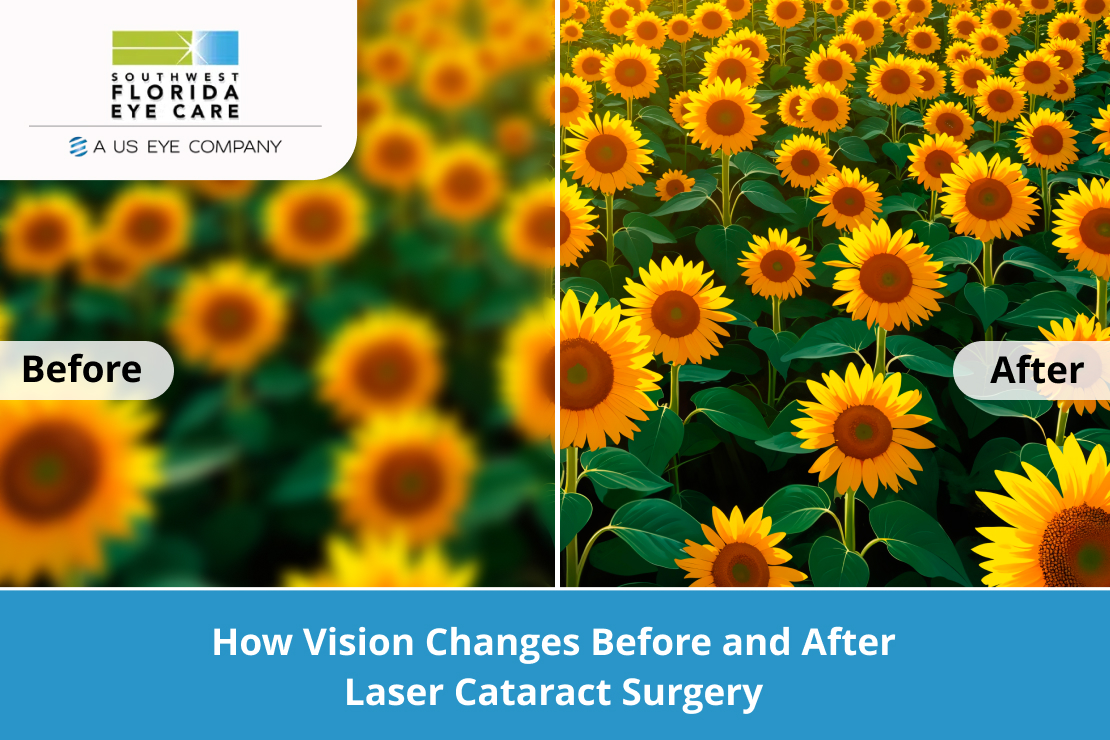
Have you noticed that driving at night feels harder, colors look duller, or reading takes more effort than it used to? Cataracts often change vision slowly, so many people adjust without realizing how much clarity they have lost. Over time, the eye’s natural lens can become cloudy, making the world look blurry, hazy, dim, or less colorful.
This blog explains how cataract vision changes before surgery, how laser cataract surgery works, and what kind of vision improvement cataract surgery may provide afterward. You will also learn what to expect during recovery, what results are realistic, and when to schedule a vision test appointment with an eye care professional.
Cataracts can make daily vision feel like you are looking through a foggy window. At first, the change may be mild. You may need brighter light to read, notice glare from headlights, or feel like your glasses prescription is changing more often. As cataracts progress, the cloudy lens can make it harder for light to focus clearly inside the eye.
Common cataract vision symptoms vs. after surgery often include:
| Before Cataract Surgery | After Cataract Surgery May Feel Like |
| Cloudy, blurry, or hazy vision | Sharper, clearer visual detail |
| Faded or yellowed colors | Brighter, more natural color perception |
| More glare from headlights or sunlight | Reduced glare for many patients |
| Halos around lights | Improved light clarity, though halos can still occur in some cases |
| Trouble reading small print | Better reading ability, depending on IOL type and glasses needs |
| Poor night vision | Improved night-driving confidence for many patients |
According to the National Eye Institute, cataracts can cause blurry or hazy vision, faded colors, poor night vision, glare, halos, double vision, and frequent prescription changes. These symptoms can also overlap with other eye conditions, which is why an eye exam is important.
Common Visual Symptoms Before Surgery
Before laser cataract surgery, cataracts can cause vision changes such as blurriness, glare, halos, faded colors, and difficulty seeing in low light. These symptoms develop gradually but can begin affecting daily activities like reading, driving, and recognizing details clearly.
Blurry or Cloudy Vision
Many patients describe cataract vision as soft, foggy, or out of focus. Glasses may help temporarily, but as cataracts progress, prescription updates may no longer provide sufficient clarity.
Glare and Halos
Glare from headlights, lamps, or bright sunlight can become more noticeable. Some people also see rings or halos around lights, especially at night. This can make evening driving more stressful.
Faded Colors and Lower Contrast
Cataracts often add a yellow or brown tint to vision. White objects may look cream-colored, and bright colors may seem muted. Contrast can also decline, making it harder to distinguish steps, curbs, or text on a low-contrast background.
Trouble With Night Vision
Because cataracts scatter light, low-light conditions can become challenging. Patients may notice difficulty reading menus in dim restaurants, walking outdoors after sunset, or driving at night.
Quick Fact: Cataracts are very common with age. The National Eye Institute reports that more than half of Americans age 80 or older either have cataracts or have had cataract surgery.
Why Cataracts Distort Light Entering the Eye
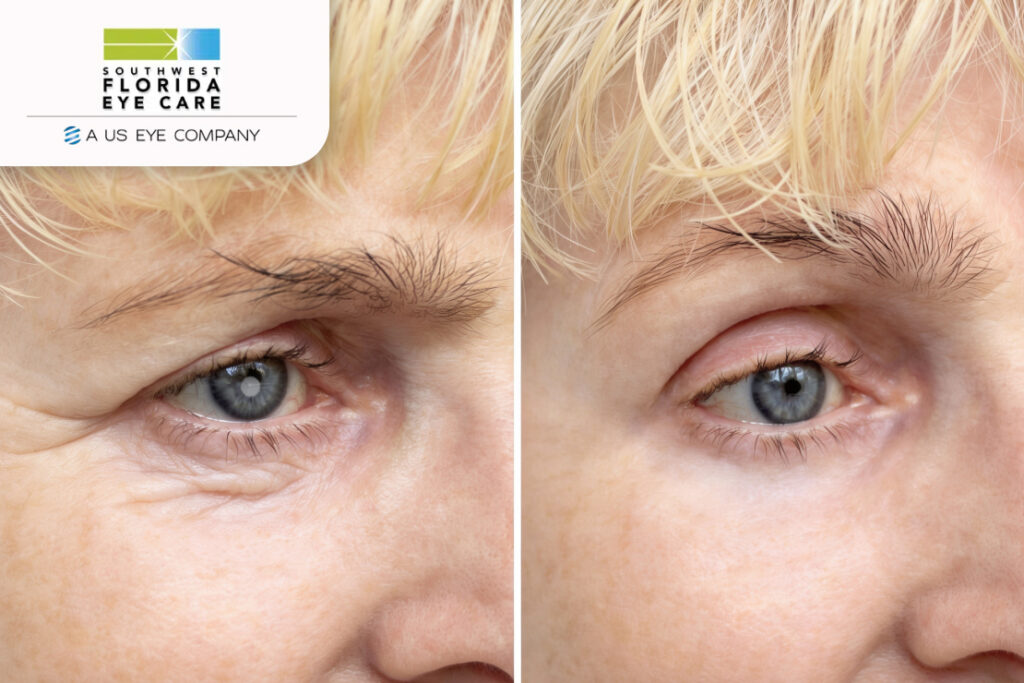
A healthy natural lens is usually clear, allowing light to pass through and focus on the retina. A cataract forms when proteins in the lens break down and clump together, creating cloudy areas. Instead of passing through cleanly, light scatters inside the eye.
This scattering is what causes many patients to ask, “What does cataract vision look like?” The answer often includes blurred detail, glare, muted color, and reduced sharpness. Cataracts do not usually appear overnight. They tend to develop gradually, which is why changes may feel subtle until they begin interfering with reading, driving, work, or hobbies.
What Happens During Laser Cataract Surgery
Cataract surgery is designed to remove the cloudy natural lens and replace it with a clear artificial lens called an intraocular lens, or IOL.
A simplified step-by-step overview includes:
- Pre-surgery measurements: Your eye is carefully measured to help determine the appropriate IOL power and lens option.
- Numbing drops: The eye is numbed for comfort.
- Laser-assisted steps: The laser helps create precise incisions and assists with cataract preparation.
- Cataract removal: The cloudy lens is gently broken up and removed.
- IOL placement: A clear artificial lens is placed inside the eye.
- Recovery monitoring: Follow-up visits help confirm that the eye is healing as expected.
How an Intraocular Lens Restores Vision Clarity
The IOL is one of the most important factors in laser cataract eye surgery outcomes. Once the cloudy natural lens is removed, the IOL helps focus light more clearly onto the retina.
Different IOL options may support different vision goals. Some lenses are designed mainly for distance vision, while others may help reduce dependence on glasses for multiple distances or help address astigmatism. The right choice depends on your eye health, prescription, lifestyle, and visual goals.
What Vision Looks Like Immediately After Laser Cataract Surgery
Immediately after laser cataract surgery, vision may appear blurry or hazy as the eye heals and adjusts to the new intraocular lens (IOL). Some patients notice brighter colors and improved clarity quickly, while temporary symptoms like light sensitivity, watering, glare, or halos may occur during recovery.
Common Vision Changes After Surgery
Blurry or Hazy Vision
Vision may not be perfectly clear right away. The eye needs time to heal and adapt after the cloudy lens is replaced.
Light Sensitivity and Glare
Temporary sensitivity to light, glare, or halos around lights can occur, especially during the early recovery period.
Brighter Colors
Many patients notice colors appear more vivid after surgery because the cloudy natural lens has been replaced with a clear IOL.
Read this: Best Time of Year for Cataract Surgery: Why Many Patients Choose
Vision Improvement Timeline:
| Time After Surgery | What You May Notice |
| First 24–48 hours | Mild blur, watery vision, scratchiness, or light sensitivity |
| The first few days | Brighter vision and gradual improvement in clarity |
| 1–2 weeks | More stable daily vision for many patients |
| 4–8 weeks | Continued healing and refinement of vision |
| After healing | Final glasses prescription may be updated if needed |
Quick Fact: Brighter colors after cataract surgery are not “extra” vision. They often reflect the removal of the cloudy, yellowed lens and replacement with a clear IOL.
Realistic Expectations vs. Ideal Outcomes
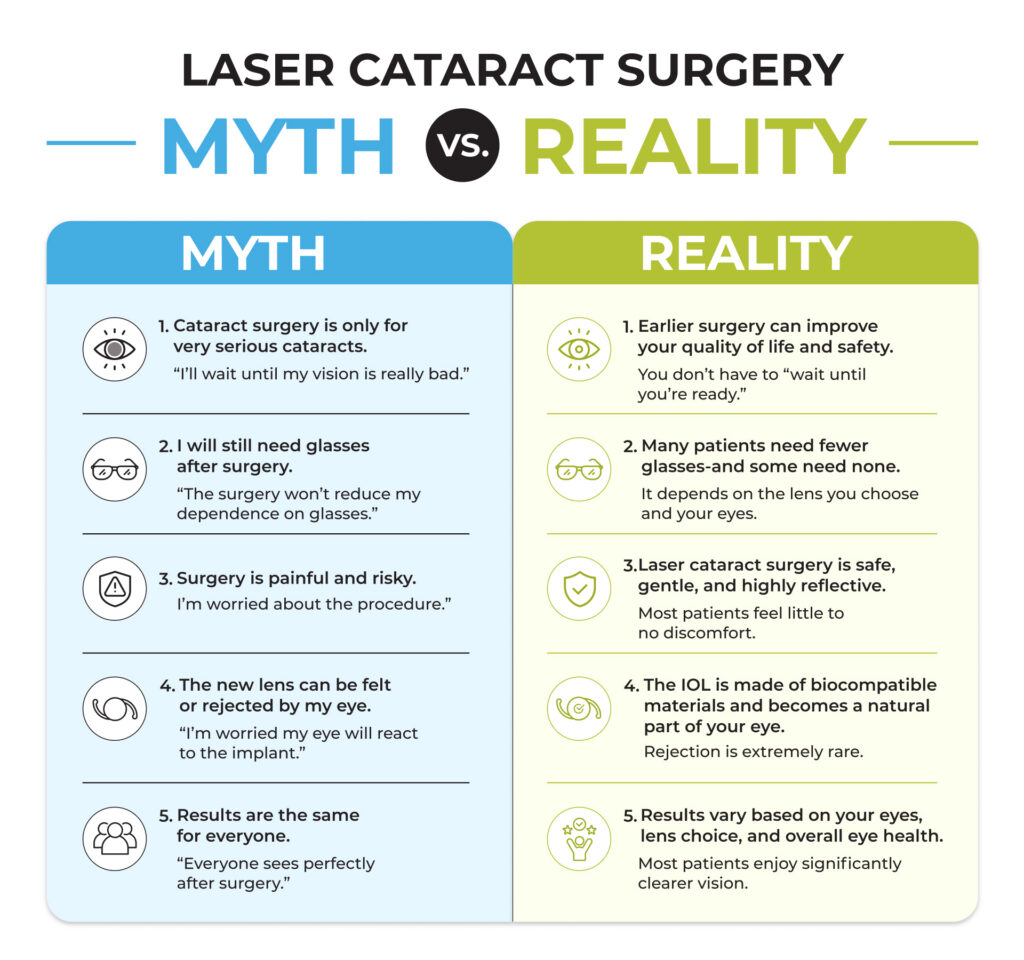
Cataract surgery can significantly improve vision affected by cataracts, but it is important to set realistic expectations. The procedure is intended to improve cataract-related blur and restore clearer light transmission. It does not prevent every future eye condition, and it may not remove the need for glasses in every situation.
Ideal Outcome
An ideal outcome may include clearer distance vision, brighter colors, better contrast, and less difficulty with glare. Some patients may also reduce their dependence on glasses depending on the IOL selected.
Realistic Outcome
A realistic outcome depends on your full eye health. If you also have glaucoma, macular degeneration, diabetic eye disease, corneal issues, or retinal concerns, your final vision may be affected by those conditions. Some patients may still need glasses for reading, night driving, or fine detail.
Temporary Visual Effects
Some patients may notice glare, halos, or other light effects after surgery, especially during the adjustment period or with certain lens types. The National Eye Institute also notes that a secondary cataract, also called posterior capsule opacification, can develop weeks, months, or years after surgery and can be treated with laser treatment.
Tip: The best way to understand your expected outcome is to ask your ophthalmologist which part of your vision change is due to cataracts and whether any other eye conditions may limit the final results.
Factors That Affect Final Visual Results
Several factors can influence before and after cataract surgery vision, including:
- Cataract severity
- IOL type and lens target
- Astigmatism
- Corneal health
- Retinal health
- Glaucoma or diabetic eye disease
- Dry eye symptoms
- Healing response
- Consistency with post-operative drops and follow-up visits
Key Takeaways
- Cataracts can make vision look blurry, hazy, dim, yellowed, or less colorful.
- Laser cataract surgery removes the cloudy lens and replaces it with a clear IOL to help restore clarity.
- Many patients notice brighter colors and improved visual sharpness after surgery, but healing takes time.
- Final results depend on lens choice, eye health, cataract severity, and other conditions.
- A cataract vision test appointment is the best next step if glare, halos, difficulty driving at night, or cloudy vision is affecting daily life.
Conclusion
Cataracts can gradually change the way the world looks. What once appeared crisp and colorful may become dull, cloudy, or difficult to see clearly. Laser cataract surgery is designed to address cataract-related vision changes by removing the cloudy lens and replacing it with a clear intraocular lens.
For many patients, the difference before vs. after surgery can feel meaningful: brighter colors, sharper details, improved contrast, and more comfortable daily vision. Still, outcomes are personal. The most accurate way to understand your options is through a comprehensive eye exam and vision correction consultation with an experienced eye care team.
Frequently Asked Questions
Can cataracts make one eye seem worse than the other?
Yes. Cataracts may develop at different rates in each eye. One eye may seem cloudier, more sensitive to glare, or less sharp than the other. An exam can determine whether the difference is due to cataracts or another eye condition.
Will laser cataract surgery change how I see colors?
Many patients notice colors look brighter or cleaner after cataract surgery because the yellowed or clouded lens has been replaced with a clear IOL. The difference may be especially noticeable when comparing the treated eye to the untreated eye.
Can I choose the type of lens used during surgery?
In many cases, yes. Your ophthalmologist will review lens options based on your eye measurements, lifestyle, prescription, astigmatism, and visual goals. Not every lens is right for every patient.
Why is my vision blurry right after cataract surgery?
Temporary blur can happen while the eye heals and adjusts. Mild light sensitivity, watering, or scratchiness can also occur. Always follow your post-operative instructions and contact your eye doctor if you experience severe pain, sudden vision loss, significant redness, or new flashes or floaters.
Do cataracts come back after surgery?
The removed cataract does not grow back because the natural lens has been replaced. However, some people develop posterior capsule opacification, sometimes called a secondary cataract, which can make vision cloudy again and is commonly treated with a quick laser procedure.
If cloudy vision, glare, halos, faded colors, or night-driving difficulty are affecting your daily life, schedule a cataract vision test with Southwest Florida Eye Care. Our team sees patients in Fort Myers, Naples, and Cape Coral and can help you understand whether cataracts are affecting your vision and what treatment options may fit your needs.
Call or schedule an eye exam today to learn whether laser cataract surgery may be right for your vision needs.